 Parler
 Gab
Gab Copy
Copy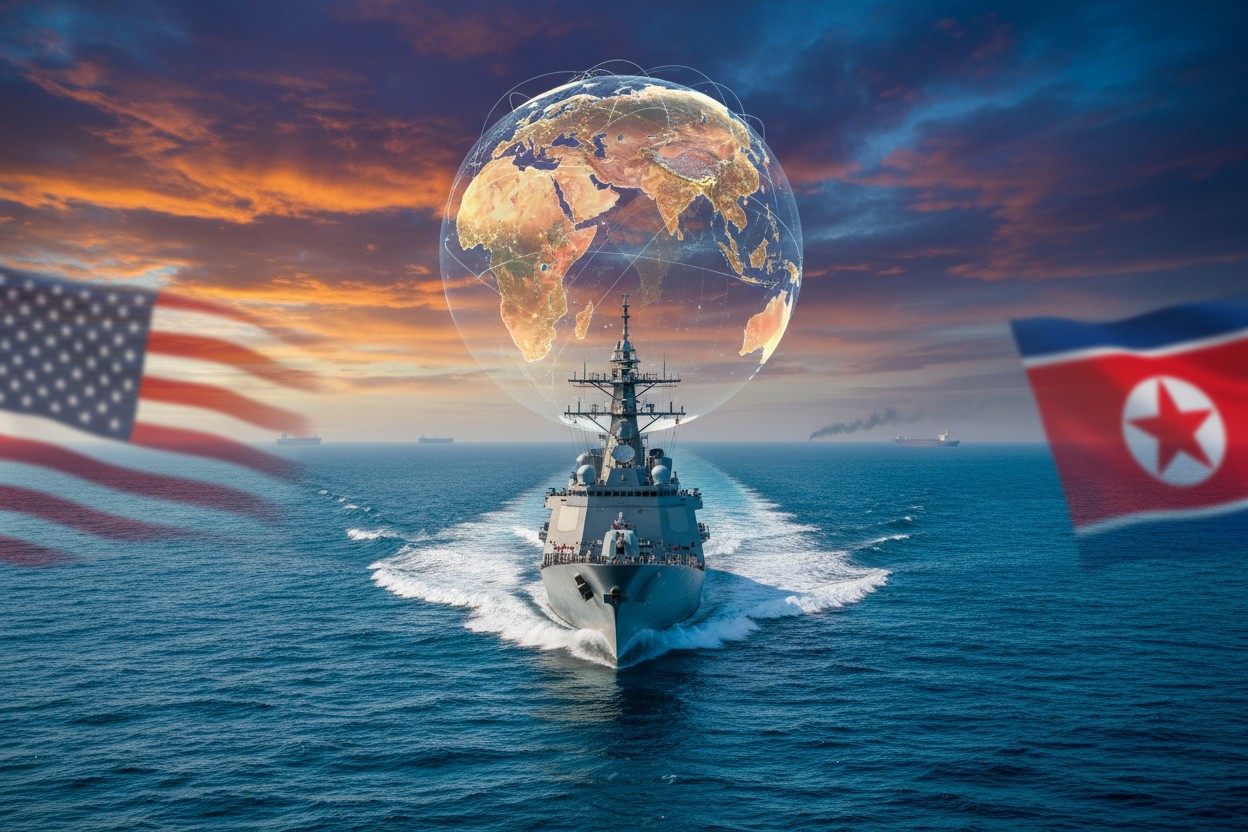
Seoul’s Official Position and Legal Hurdles
The official said, “Nothing has been decided,” according to statements reported by Middle East Eye [1]. Media reports from outlets including SBS on Sept. 3 claimed Seoul was preparing to dispatch naval forces before the end of the year, with one National Defense Ministry official telling Australia’s SBS that “we are making concrete preparations to dispatch naval forces to the Strait of Hormuz” [3]. The reports indicated the deployment would include P-8 maritime patrol aircraft, an explosive ordnance disposal team, and a logistics support ship [3]. The presidential official pushed back on these reports, emphasizing that deployment must clear South Korean legal requirements and a parliamentary vote [1]. An internal assessment of military readiness, particularly given tensions on the Korean Peninsula, is also required before any decision is made [1]. The official added that South Korea-U.S. security talks were “not currently progressing” [1].Assets Under Consideration and International Talks
Assets reportedly under review include a maritime patrol aircraft, a naval logistics support vessel, a mine detection and clearance unit, and an explosive ordnance disposal team [3]. Seoul is reportedly discussing the extent of its potential contribution with the United States, the United Kingdom, and France, according to a presidential official [1]. No final list of assets has been confirmed, and discussions remain at an initial stage, the official said [1]. The Strait of Hormuz deployment would be separate from South Korea’s existing naval operations, which focus on counter-piracy in the Gulf of Aden [3]. The potential deployment comes as disruptions around the strait have already forced carriers to redesign their networks, with Dubai’s Jebel Ali port falling from 10th to 32nd in global rankings due to the Iran war [4]. These disruptions have contributed to rising oil prices and heightened concern about global supply chains [5][6].Trump’s Demand and Reduction of Joint Military Exercises
On Aug. 17, Trump ordered Secretary of War Pete Hegseth to substantially reduce planned joint military exercises with South Korea, hours before drills were due to begin [2]. Trump said he had asked South Korea’s president to join Washington in what he called the “Denuclearization of the Islamic Republic of Iran” and was refused [2]. The president linked Seoul’s unwillingness to aid in the Iran war to his decision to reduce joint military exercises with the country [2]. Trump attributed the exercise reduction to his relationship with North Korean leader Kim Jong Un, calling the drills costly and hostile toward Pyongyang [7]. The decision came amid ongoing diplomatic engagements between Washington and Pyongyang, with Trump saying Aug. 19 he planned to meet Kim later in the year [8]. Trump told reporters that Kim “has 57 very powerful nuclear weapons,” adding, “We should have never have allowed it to happen” [8].North Korea’s Response and Regional Tensions
North Korea has consistently dismissed U.S. actions on the peninsula as provocative. The Democratic People’s Republic of Korea has stated that military exercises remain provocative and aggressive, and that denuclearization talks require reciprocal actions from the United States [9]. North Korean leader Kim Jong Un has previously warned of the “danger of a nuclear war” in connection with trilateral naval exercises conducted by the United States, South Korea, and Japan [9]. The broader regional context includes ongoing tensions over North Korea’s nuclear program, which has expanded significantly in recent years [8]. South Korea has also faced internal political turmoil, including former President Yoon Suk-yeol’s brief declaration of martial law in December 2024, which was met with immediate opposition and led to his being banned from leaving the country [10]. The United States has continued to assert its commitment to South Korea’s defense, with the Pentagon citing an “unequivocal nuclear-based alliance” between Washington and Seoul [11].Strategic Implications for the Korean Peninsula
South Korea’s potential deployment to the Strait of Hormuz would occur while the United States is simultaneously managing multiple conflicts, creating strain on its military resources. The U.S. has been transferring components of its Terminal High Altitude Area Defense (THAAD) system from South Korea to the Middle East, highlighting the strain of simultaneous conflicts with Iran and North Korea, according to reports [12]. This move depletes Indo-Pacific stockpiles at a time of heightened regional tension [12]. The strategic calculus for Seoul is complicated by its dependence on U.S. military support against North Korea’s nuclear capabilities, even as Washington’s attention shifts toward the Middle East [13]. South Korea’s economy, heavily reliant on imports for manufacturing, remains vulnerable to disruptions in global shipping lanes [14]. A prolonged conflict around the Strait of Hormuz could have significant economic consequences for the region, as the strait is a critical chokepoint for global oil shipments [15].Global Consequences of Hormuz Disruption
The ongoing conflict around the Strait of Hormuz has already produced measurable global effects beyond military calculations. Asian spot LNG prices surged to almost $26 per million British thermal units in early September, a 5% weekly gain following the resumption of strikes between the United States and Iran [16]. Brent crude futures rallied above the $90 handle in late August after the U.S. and Iran exchanged attacks for the first time in weeks [5]. Financial markets have been volatile, with bond yields reaching multi-year highs as oil prices spiked [17]. Economic analysts have warned that the combined effects of Hormuz disruptions and potential climate events could produce a global food crisis by 2027 [18]. A report from JPMorgan Chase outlined a scenario in which shipping disruptions in the Strait of Hormuz converge with a potentially historic El Niño to weaken crop yields and constrain production [18]. These developments underscore how a regional military decision by South Korea could have far-reaching consequences beyond the immediate theater of operations [19].Conclusion
South Korea’s consideration of military deployment to the Strait of Hormuz remains in its early stages, with no final commitment made and significant legal and procedural hurdles ahead [1]. The presidential office has emphasized that nothing has been decided and that any deployment would require parliamentary approval and a careful assessment of military readiness on the Korean Peninsula [1]. The decision unfolds amid a complex web of pressures: U.S. demands for support in the Iran conflict, an ongoing diplomatic overture toward North Korea, and regional security concerns that show no sign of abating [2][8]. How Seoul navigates these competing demands will have implications not only for the Korean Peninsula but also for the broader stability of global shipping and energy markets [15]. For now, the official position remains one of deliberation rather than commitment [1].References
- Middle East Eye. "South Korea weighs options to support Hormuz Strait navigation, including military measures." September 4, 2026.
- Just The News. "Trump digs South Korea over refusal to help with Iran war." August 25, 2026.
- Middle East Eye. "Report: South Korea preparing for Strait of Hormuz deployment." September 4, 2026.
- FreightWaves. "China gains as geopolitics redraws new global container port rankings." August 28, 2026.
- Zero Hedge. "Stock Futures Drop To Close Out August As Oil Jumps On Renewed Iran Hostilities." August 31, 2026.
- Zero Hedge. "Futures Tumble As Global Yields Hit Multi-Year High, Oil Jumps On Iran Escalation." September 1, 2026.
- "Trump says he will meet Kim Jong-un this year (VIDEO)." August 19, 2026.
- The Epoch Times. "Trump Says He Plans to Meet With North Korean Leader This Year." August 20, 2026.
- NaturalNews.com. "North Korean leader Kim Jong Un warns of nuclear war, orders military to get ready for possible US-led invasion." September 5, 2023.
- NaturalNews.com. "South Korea briefly under martial law after President Yoon banned all political activities and placed military." December 5, 2024.
- NaturalNews.com. "Pentagon: US ready to support South Korea with NUCLEAR WEAPONS." November 6, 2024.
- Ramon Tomey. "U.S. Pulls THAAD Missile System Components from South Korea Amid Ongoing Conflict with Iran." NaturalNews.com. March 12, 2026.
- Bright Videos Network. "2026-03-13-BVN-GLOBAL FAMINE NOW CERTAIN_otter_ai-." March 13, 2026.
- Bright Videos Network. "2026-02-20-BVN-DARK NAZI ORIGINS_otter_ai-." February 20, 2026.
- Vlado Vivoda. "Diversification of oil import sources and energy security: A key strategy or an elusive objective?" Energy Policy. 2009.
- Zero Hedge. "Asian LNG Prices Surge To Highest Since 2022 As Iran War Escalates." September 4, 2026.
- Zero Hedge. "Futures Slide As Treasury Yields Surge, Erasing Bessent Intervention, Driven By Oil Spike." August 20, 2026.
- NaturalNews.com. "JPMorgan warns of potential 2027 global food crisis driven by Hormuz disruptions and El Niño." August 20, 2026.
- The Epoch Times. "South Korea, US Agree to Continue Close Cooperation on North Korea." August 25, 2026.
Explainer Infographic

Germany Approves Nearly $1 Billion in Arms Exports to Israel, Der Spiegel Reports
By Garrison Vance // Share

Netherlands Moves Gold From U.S. and Canada to London, Citing Geopolitical Unrest
By Garrison Vance // Share
European Gas Prices Rise to Highest Since 2023 as U.S. Intensifies Strikes on Iran
By Sterling Ashworth // Share

Indian Anti-Terror Agency Links Six Ukrainians and American to Myanmar Drone Attack
By Chase Codewell // Share
Trump Calls for Strait of Hormuz to Be Renamed “Trump Strait”
By Garrison Vance // Share

OpenAI Releases GPT-6 Astra As Its President Declares Start of AGI Era
By Chase Codewell // Share

Ashwagandha for Sleep: What the Evidence Shows and What to Consider
By cocosomers // Share

Creatine: A natural boost for aging muscles?
By avagrace // Share

New Saudi Nuclear Agreement Raises Concerns for Ending Iran Conflict
By garrisonvance // Share
Indian Anti-Terror Agency Links Six Ukrainians and American to Myanmar Drone Attack
By chasecodewell // Share
South Korea Weighs Military Deployment to Strait of Hormuz, Presidential Office Says
By garrisonvance // Share

Russian Intelligence Chief Warns of Real Risk of Large-Scale Conflict in Eurasia
By garrisonvance // Share