Join the movement to end censorship by Big Tech. StopBitBurning.com needs donations and support.
Study Finds Gut Compound Urolithin A May Help Repair Intestinal Lining
By morganverity // 2026-09-20
Mastodon
 Parler
 Gab
Gab Copy
Copy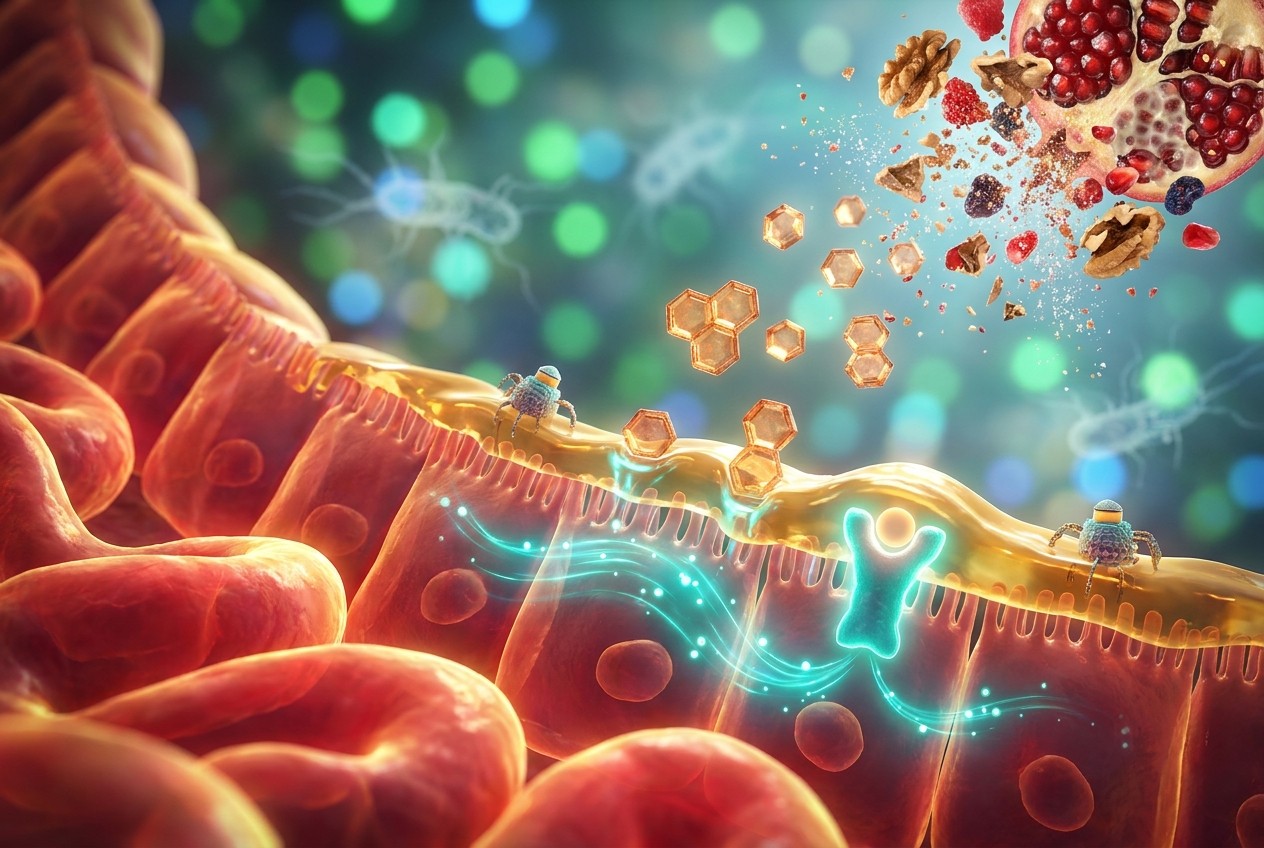
Researchers at the University of Louisville (UofL) have identified a mechanism by which a naturally produced gut compound may help protect the intestine and potentially guide new treatment approaches for inflammatory bowel disease (IBD) according to a study published Sept. 17 in the journal Nature Communications.
The compound, urolithin (UroA) is a microbial metabolite produced by gut bacteria after the digestion of foods including pomegranates, walnuts and berries, the study stated. The research was led by Venkatakrishna Rao Jala, associate professor in the Department of Microbiology and Immunology and UofL's Brown Cancer Center, according to the University of Louisville. IBD includes Crohn's disease and ulcerative colitis and affects millions of people worldwide, researchers said.
The findings suggest that UroA activates a protective pathway in the intestine that may help maintain gut health, according to the study. Researchers said the work could inform more targeted treatments for IBD rather than broadly suppressing immune responses.

UroA Activates AHR in Intestinal Epithelial Cells, Study Says
The study centers on the aryl hydrocarbon receptor (AHR) a protein sensor that responds to signals from the environment, diet and gut microbes, according to UofL. Scientists have known for years that AHR can contribute to harmful effects when activated by certain environmental toxins, but earlier research also suggested that beneficial dietary compounds can activate the same receptor in ways that support intestinal health. The new findings suggest that the effect depends on both the location and the strength of AHR activation, researchers said. The team found that UroA selectively activates AHR in intestinal epithelial cells, which are the specialized cells that form and protect the gut lining, according to the study. Prior research on urolithins has indicated potential neuroprotective benefits, according to a review of laboratory and animal studies reported by NaturalNews.com [1]. Separate research found that pomegranate polyphenols are metabolized by gut bacteria into urolithin A, a compound that reduces arterial plaque buildup and inflammation [2].Protective Pathway Triggers NLRP6 Inflammasome, Researchers Report
When UroA activated AHR in intestinal epithelial cells, it triggered a cellular defense system called the NLRP6 inflammasome, the study stated. Inflammasomes are often associated with damaging inflammatory responses, but researchers found that this system can also play a protective role under the right conditions. The activation prompted the release of appropriate levels of molecules involved in normal intestinal function, according to the study. Those molecules helped repair the gut lining, reinforce the intestinal barrier, increase the production of protective mucus and strengthen antimicrobial defenses instead of driving additional inflammation, researchers said. Not all polyphenols are absorbed efficiently without the right gut bacteria, according to Dr. Steven R. Gundry, author of Gut Check [3]. Gundry wrote that ellagitannins, a type of polyphenol found in berries, pomegranates and walnuts, require specific gut microbes to be converted into absorbable compounds such as urolithin A [3]. He also noted that only about 20% of the general population has the right mix of bacteria to produce urolithin A, while about 50% of centenarians studied had that ability [3].Lead Investigator: Not All Inflammatory Pathways Are Harmful
"The findings show that not all inflammatory pathways are harmful," said Sweta Ghosh, previously a postdoctoral researcher in Jala's laboratory and lead investigator on the study. "Under the right conditions and in the right cells, these pathways can play an essential role in maintaining gut health and supporting tissue repair." "This study helps us better understand how natural compounds produced through interactions between diet, gut microbes and the body can influence disease processes," Jala said. "By identifying this specific protective pathway, we may be able to develop more targeted therapeutic approaches that restore intestinal balance instead of broadly suppressing immune responses." The team tested the mechanism using cell studies, organoid models and intestinal tissue samples from patients with IBD, according to the study. In the human tissue samples, UroA activated the same protective pathway observed in the other experiments, researchers said.Study Builds on Prior UroA Research, May Guide Targeted IBD Treatments
The findings raise the possibility that future treatments for IBD and other gastrointestinal diseases could target specific protective pathways in selected cell types rather than broadly suppressing the immune system, researchers said. Jala previously led research identifying beneficial effects of UroA in the gut, according to UofL. The new work builds on those findings by explaining more precisely how UroA interacts with the immune system to support intestinal health, the university stated. Separately, a review of research published in the journal Nutrients found that a diet heavy in ultra-processed foods is strongly linked to a higher risk of developing Crohn's disease, a severe inflammatory bowel condition [4]. Research has also associated gut-supportive dietary patterns with a lower risk of other conditions, including kidney stones [5].References
- Coco Somers. "Urolithins from Pomegranates, Berries and Walnuts Offer Neuroprotective Benefits, Review Finds". NaturalNews.com. May 14, 2026.
- Ramon Tomey. "Study: Gut Bacteria Transform Pomegranate Compounds into Heart-Protecting Molecule". NaturalNews.com. May 4, 2026.
- Dr. Steven R. Gundry. "Gut Check: Unleash the Power of Your Microbiome to Reverse Disease".
- NaturalNews.com. "The hidden cost of convenience: How ultra-processed foods may be fueling a Crohn's disease epidemic". September 7, 2026.
- NaturalNews.com. "Gut-supportive diet tied to 83% lower odds of kidney stones, study finds". September 9, 2026.
Explainer Infographic

Mastodon
Parler
Gab
Copy
Tagged Under:
nutrients digestion immune system research natural health food science healing phytonutrients polyphenols cures remedies real science gut health Censored Science food cures inflammatory bowel disease food is medicine goodhealth goodfood health science gastrointestinal function aryl hydrocarbon receptor digestive function intestinal lining Urolithin A cellular defense gut repair NLRP6 inflammasome
You Might Also Like

Report Examines 11 Supplements for Lowering Blood Sugar Naturally
By Coco Somers // Share
Report Outlines Four Animal-Based Foods Packed With Creatine
By Coco Somers // Share
Apple Varieties Ranked: Nutrition and Pesticide Residues Compared
By Coco Somers // Share

The artificial fat: How banned trans fats disrupt your body’s natural balance
By Ava Grace // Share
Study Links Major Depression to 47% Higher Risk of Chronic Pancreatitis
By Belle Carter // Share
Recent News
Apple Varieties Ranked: Nutrition and Pesticide Residues Compared
By cocosomers // Share



Lactic acid bacterium shows promise in flushing nanoplastics from the body
By willowt // Share
Popular This Week