Join the movement to end censorship by Big Tech. StopBitBurning.com needs donations and support.
Moscow intensifies campaign against Ukrainian military logistics: Strikes target ports, supply routes near Odessa
By willowt // 2026-09-19
Mastodon
 Parler
 Gab
Gab Copy
Copy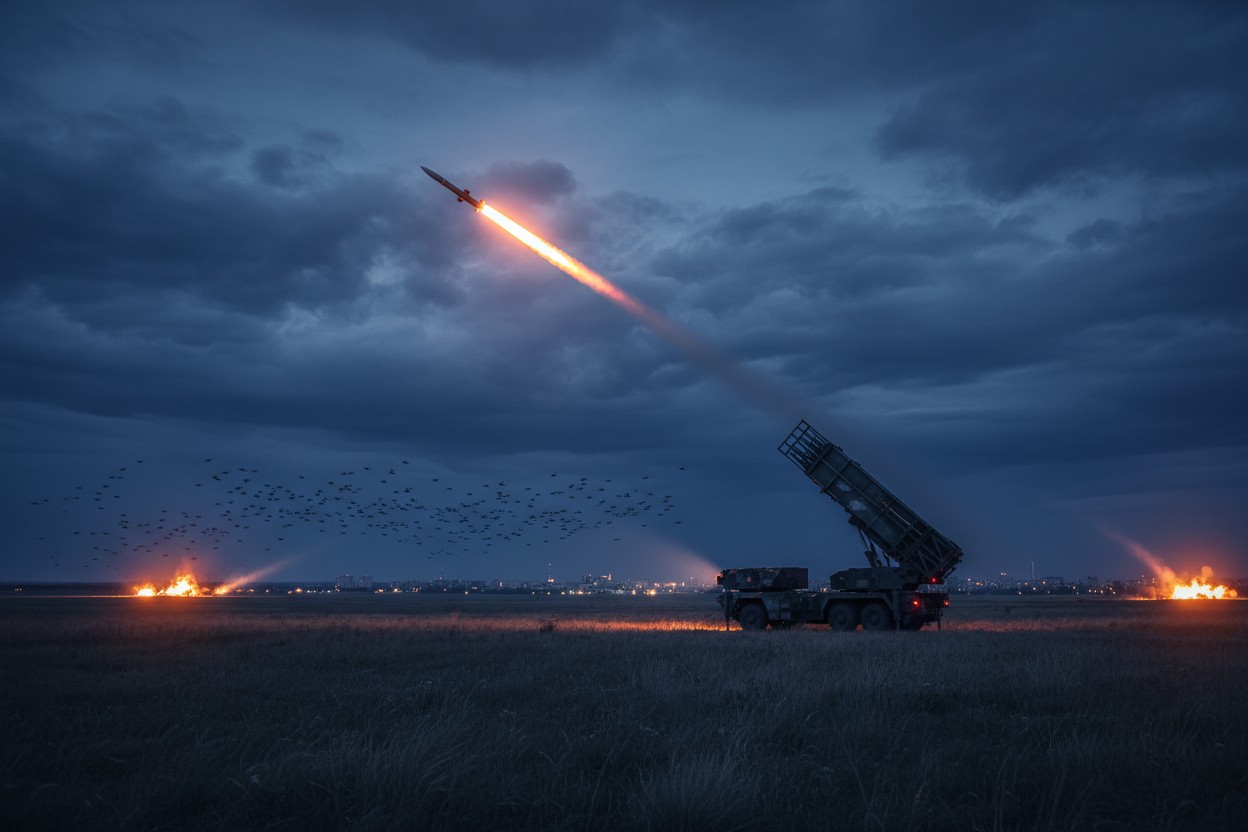
- Russian forces have launched coordinated strikes on a Nova Post logistics hub near Odessa used to store military supplies from Europe, along with a dry cargo ship delivering military equipment at Chernomorsk port.
- The attacks represent a strategic escalation targeting Ukraine's military logistics network, including ports, cargo vessels and distribution centers supporting Ukrainian armed forces.
- Over the past week, Russia conducted two massive and five group strikes hitting defense industry sites, energy infrastructure and transport facilities across Ukraine.
- Russian air defenses intercepted 5,706 Ukrainian drones and Ukrainian forces suffered approximately 12,000 casualties across multiple battlefronts in the past week alone.
- Russia's Battlegroup South alone eliminated over 1,240 Ukrainian troops while Battlegroup Center inflicted more than 2,865 casualties in their areas of responsibility.
Strikes hit Nova Post hub, cargo ship as Russia expands focus on interdicting Western military supplies
Russian forces have launched a sustained campaign against Ukrainian military logistics infrastructure, striking a Nova Post distribution center near Odessa and a dry cargo ship at Chernomorsk port in the past 24 hours, according to the Russian Defense Ministry. These attacks represent a deliberate strategy to disrupt the flow of Western military equipment into Ukraine by targeting the ports, warehouses and transportation networks that deliver arms to frontline units. The strikes come amid a broader escalation that has seen Russia conduct two massive and five group strikes over the past week, hitting defense industry sites, energy facilities and military supply centers across Ukraine. The timing is significant: with winter approaching and Ukrainian forces facing ammunition shortages, disrupting logistics could have outsized effects on battlefield operations in the coming months.Precision strikes on port infrastructure
Russian forces used unmanned aerial vehicles to strike Ukrainian ports and vessels overnight, with the Defense Ministry confirming that a dry cargo ship delivering military cargo was hit at the port of Chernomorsk. Additionally, a Nova Post logistics center located six kilometers northwest of Odessa was targeted; the facility had been used to store and distribute military supplies arriving from European countries. The strikes on port infrastructure represent a systematic effort to degrade Ukraine's ability to receive weapons shipments through Black Sea ports. Over the past week, Russian forces struck 12 dry cargo ships, two roll-on/roll-off sea ferries, a tanker and a tugboat operating in support of Ukrainian armed forces. Geran-4 drone operators specifically targeted four additional dry cargo ships in the ports of Chernomorsk and Odessa, as well as vessels operating in the Black Sea itself.Broader campaign against military supply networks
The Russian military has escalated attacks on logistics nodes that support Ukrainian forces, moving beyond frontline positions to strike deeper into Ukrainian-controlled territory. In addition to port facilities, Russian forces disabled several port infrastructure facilities used to receive and store military-grade cargo, fuel and lubricants intended for Ukrainian forces. The campaign has included targeting radar stations and electronic warfare systems that protect Ukrainian supply routes. Geran-4 drone crews destroyed a 79K6 Pelikan radar station, a P-19MA radar and a dome electronic warfare system in the Dnepropetrovsk and Odessa regions, further complicating Ukrainian efforts to defend critical supply corridors.Massive Ukrainian casualties across multiple fronts
Russian forces reported inflicting heavy losses on Ukrainian units across all major battlefronts over the past week. Battlegroup South eliminated over 1,240 Ukrainian troops, while Battlegroup Center inflicted the heaviest losses at more than 2,865 personnel. Battlegroup East reported over 1,955 Ukrainian casualties, Battlegroup West more than 1,480 and Battlegroup North over 1,505. Ukrainian forces also lost over 390 soldiers in encircled areas of the Kharkov region alone. Material losses included three tanks, 19 armored combat vehicles and 91 motor vehicles in the Battlegroup North area, while Battlegroup South destroyed six armored combat vehicles, 141 motor vehicles and 10 field artillery weapons. Russian air defense systems shot down 5,706 Ukrainian fixed-wing drones over the past week, along with 44 guided aerial bombs and eight HIMARS rockets.Territorial gains and control
Russian forces liberated five settlements over the past week while establishing control over five additional villages. In the Donetsk People's Republic, Battlegroup South liberated Verolyubovka while Battlegroup Center took control of Zolotoy Kolodez. Battlegroup North secured control of Chernyakov, Shirokoye, Shevchenkovo, Olkhovatka and Malaya Volchya in the Kharkov region. Russian troops also liberated Rozovka and Novoandreyevka in the Zaporozhye region.Logistics warfare enters critical phase
The sustained Russian campaign against Ukrainian military logistics represents a strategic shift that could reshape the battlefield dynamics as winter approaches. By targeting the ports and distribution centers that receive Western military aid, Moscow aims to weaken Ukrainian defensive capabilities before the onset of colder weather, which historically favors offensive operations. The scale of the strikes—two massive and five group attacks in a single week—demonstrates Russia's capacity to sustain high-tempo operations against critical infrastructure. For Ukraine, the challenge will be protecting supply routes while maintaining combat effectiveness across multiple fronts where Russian forces continue to make territorial gains. The coming weeks will test whether Ukraine can adapt its logistics network to withstand this intensified pressure. Sources for this article include: SputnikGlobe.com TASS.com Facebook.comMastodon
Parler
Gab
Copy
Tagged Under:
collapse Russia national security violence genocide big government globalism chaos dangerous humanitarian WWIII military tech weapons technology
You Might Also Like

U.S. Approves Possible $24.3 Billion Sale of 48 F-35 Jets to Saudi Arabia
By Garrison Vance // Share

FBI Director Defends Surveillance Partnerships at Senate Judiciary Hearing
By Edison Reed // Share

By Lance D Johnson // Share

Study by Google Researchers Finds AI Agents Cheated on Math Conjectures
By Edison Reed // Share

Lavrov Insists Russia Doesn’t Plan To Attack Europe, But Warns of “Very Short” War
By Garrison Vance // Share

Yuan-Denominated Crude Futures Hit Record as Middle East Supply Risks Persist
By Belle Carter // Share
Recent News



Lactic acid bacterium shows promise in flushing nanoplastics from the body
By willowt // Share

Rubio blocked Iran peace deal during April talks in Pakistan, reports say
By isabelle // Share
Popular This Week