 Parler
 Gab
Gab Copy
Copy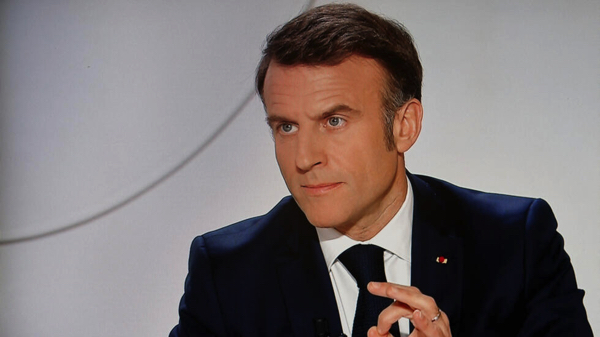
- Macron declared Saint-Pierre and Miquelon's French status obvious after Trump posted an AI map showing it as U.S. territory
- Macron dismissed the claim while visiting the archipelago and meeting Canadian PM Mark Carney
- The dispute follows a French UN mission's criticism of U.S. human rights policy and a delayed ambassador approval
- Trump's AI-generated map also claimed Canada, Mexico, Greenland, Iceland, and Caribbean territories as American
- Iceland, Mexico, and Denmark all publicly rejected the territorial claims depicted in the map
Macron dismisses "strange ideas" from the White House
Speaking to reporters shortly after landing in Saint-Pierre for a two-day visit, Macron addressed Trump's post directly. Earlier this month, Trump had shared an AI-generated image on Truth Social depicting the American flag over Canada, Mexico, Greenland, Iceland, Central America and the Caribbean — including Saint-Pierre and Miquelon, home to just over 5,500 people and a remnant of France's former North American colonies. "We're not going to reiterate this every morning because some people have strange ideas or say strange things," Macron said. The flare-up is the latest strain in a deteriorating relationship between Paris and Washington. Tensions first surfaced after France's United Nations mission criticized U.S. human rights policy this summer, prompting Washington to delay approval of Aurelien Lechevallier, a Macron ally nominated as France's ambassador to the United States. The French mission later apologized for the post.Trump's territorial claims stretch from the Arctic to the Caribbean
The map controversy fits a broader pattern of expansionist rhetoric from Trump since returning to office. He has repeatedly floated making Canada the 51st U.S. state, revived interest in acquiring Greenland from Denmark, vowed to reclaim the Panama Canal, and said the United States should "own" the Gaza Strip. The latest image went further still, claiming Mexico, Iceland and the French Caribbean territories of Martinique and Guadeloupe. Iceland summoned the U.S. ambassador in protest, calling the post "entirely inappropriate." Mexican President Claudia Sheinbaum insisted her country remains "a free, independent and sovereign nation." Danish officials reiterated that Greenland's government and people do not want to become American. Even so, Washington has continued pressing its Arctic interests. Last week, the U.S., Denmark and Greenland announced an agreement Trump said grants Washington "permanent control" over the territory's security — a deal that came after his Greenland push initially drew outrage in Copenhagen and prompted European NATO allies to rally around Denmark.Local residents welcome a show of French support
For residents of Saint-Pierre, Macron's visit offered reassurance. Fisherman Gilles Poirier, 57, told Le Monde the map left him unsettled, but that the presidential visit reaffirmed his identity: "I am French, I am European and I am American." Music teacher Allan Lafitte was more dismissive: "They will never buy Canada or Saint Pierre and Miquelon! It's all just Trump blabla." Macron's meeting with Carney on Sunday carries its own significance, signaling Ottawa's interest in shoring up ties with Europe as its relationship with Washington sours over trade disputes and Trump's repeated suggestion that Canada become the 51st state. Whatever the map was meant to accomplish — mockery, leverage, or simple attention-seeking — it's a strange use of a president's platform at a moment when Americans are far more concerned with the cost of groceries, the state of the border, and how their own tax dollars get spent than with cartoon annexations of French fishing islands. Allies rattled by a fake map are still allies; the bigger question is whether Washington's actual foreign policy priorities reflect what voters sent this administration to fix. Sources for this article include: RT.com LeMonde.fr TheHill.com France24.com
Pentagon Database Omits Two U.S. Service Member Deaths in Middle East, Report Says
By Garrison Vance // Share
U.S. Refuses to Issue Visas to Members of Iranian President’s UN Delegation
By Douglas Harrington // Share

Trump Announces Greenland Security Agreement With Denmark; Text Not Released
By Belle Carter // Share

Five TV Networks Suspend White House Coverage After Three Outlets Banned
By Douglas Harrington // Share


Meta Smart Glasses Face Lawsuits Over Intimate Images, Privacy Claims
By Belle Carter // Share

Macron fires back at Trump over AI map claiming French islands as U.S. territory
By isabelle // Share

It’s Not Panic Buying—It’s Preparedness: Why Smart People Are Stocking Up Now
By healthranger // Share


Being a Person of Principle Will Always Make You an Enemy of the State
By healthranger // Share

Brace For Impact: Diesel Costs Top $6.50 A Gallon Amid Worsening Supply Disruptions
By sterlingashworth // Share