Parler
 Gab
Gab Copy
Copy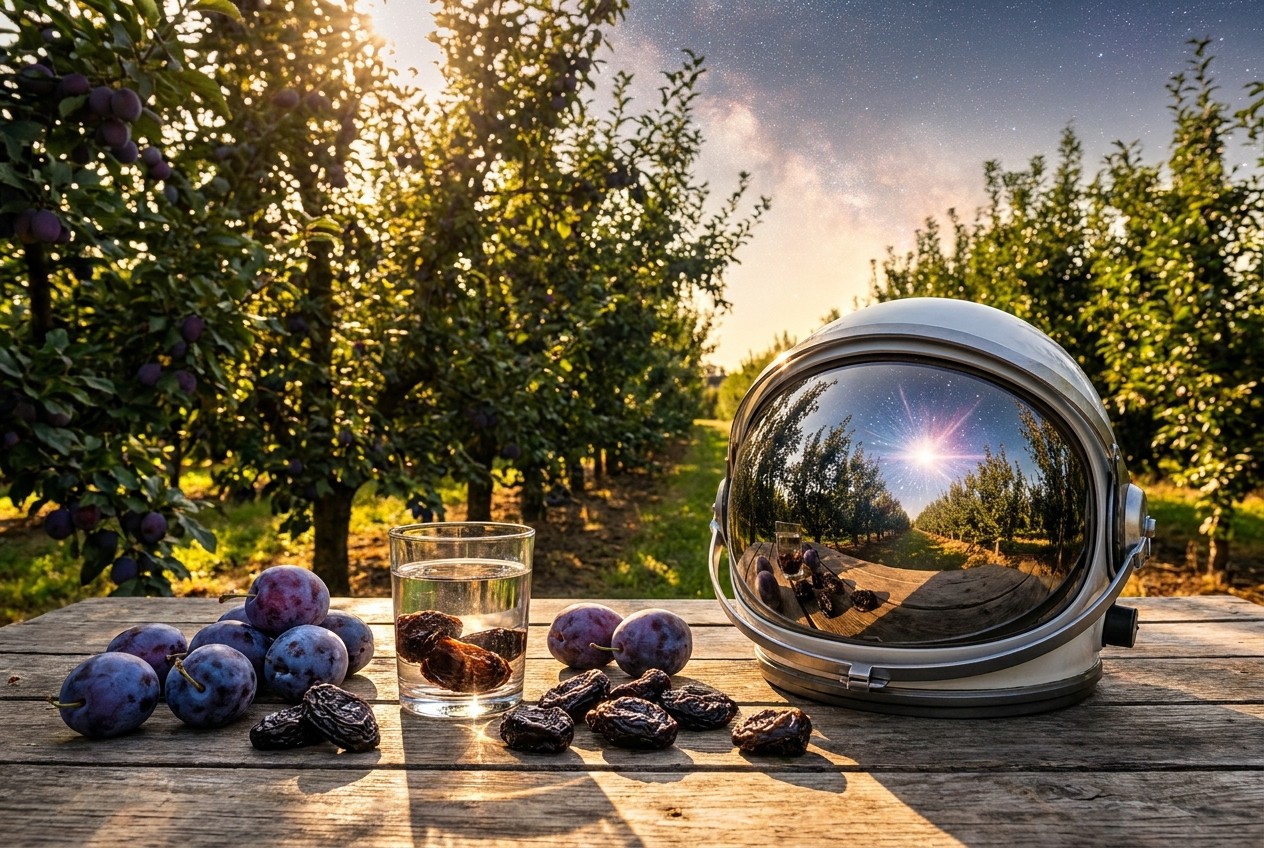
Space Research Examines Prunes for Bone Protection
NASA-supported researchers have studied whether prunes could protect against the bone-damaging effects of space radiation during long-duration missions, according to study documents cited in a report published by the Epoch Times. In one study described in that report, mice exposed to radiation experienced substantial bone loss, while mice fed a diet containing dried plums were protected from some radiation damage, researchers reported. Other animal research has explored dried plums as a potential dietary countermeasure against radiation-induced bone loss, according to the same report. Separate research has examined dried plums in relation to bone health in humans. Bahram H. Arjmandi, a professor and chairman of the Department of Nutrition, Food, and Exercise Sciences at Florida State University (FSU), tested 100 postmenopausal women over a 12-month period, according to an account published by NaturalNews.com [1]. A study conducted by researchers at FSU and Oklahoma University found that consuming dried plums daily can help prevent fractures and osteoporosis in the elderly, especially postmenopausal women who commonly struggle with bone density loss, according to a NaturalNews.com report [2].Prune Puree as a Baking Ingredient
When blended with water into a puree, prunes can replace some of the butter or oil in recipes such as brownies, muffins and breads, according to food science guidance cited in a report published by the Epoch Times. The puree can reduce added fat while adding fiber and natural sweetness, the report stated. The puree also helps baked goods retain moisture, and its natural sugars contribute sweetness, according to the report. A suggested starting point is replacing some of the butter in a recipe with an equal amount of prune puree, the report stated. Prunes are described in a culinary reference as having a richer flavor and denser texture than their fresh counterparts, a characteristic that carries through when the fruit is incorporated into purees and other preparations [3]. The same reference notes that prunes are, in essence, dried plums.California Dominates U.S. Prune Production
California's long growing season, sunny days, cool evenings, and rich valley soils provide favorable conditions for growing prunes. The report cited California's climate and soil as key factors in its production dominance. The same report described the d'Agen lineage as the foundation of California's prune industry. Separate research published in Food Chemistry examined the drying behavior of d'Agen prunes, describing moisture loss during drying as a first-order rate process with an observed lag time of approximately 10 to 15 minutes under the conditions tested [4]. Additional research published in Food Research International described drying plums as a slow and energy-intensive process because of the fruit's waxy skin [5]. That study, authored by Sefa Tarhan of Gaziosmanpasa University, examined chemical and thermal pretreatment combinations for plum drying at low and moderate drying air temperatures [5].Historical Roots and Processing
California's prune industry can be traced to a French plum cutting brought to the state more than 175 years ago, according to historical accounts cited in a report published by the Epoch Times. Louis Pellier, an immigrant from France, grafted the cutting of the prized d'Agen plum onto wild plum trees growing near Mission San Jose, the historical accounts state. Within a few years, the trees began producing fruit, and other farmers took notice. By the 1870s, growers were planting trees propagated from Pellier's stock to meet America's growing appetite for European prunes, according to the report. Peer-reviewed research has monitored carbohydrate changes during dehydration of d'Agen prunes. One study published in Food Chemistry reported that the sorbitol content of the plum should be considered as one of the criteria for the production of a satisfactory dried product [6]. The same study documented fructose, glucose, sucrose, and sorbitol concentrations in plums stored under freezer conditions [6]. A separate study published in the Journal of Agricultural and Food Chemistry reported that process-mediated decreases in the main phenolics, neochlorogenic acid and chlorogenic acid, were minimal at 85 C but significant at 60 C, while destruction of anthocyanins was extensive at both temperatures [7].Conclusion
Prunes remain best known for digestive health, but research and industry data identify additional facts about their potential uses, production, and history, according to a report published by the Epoch Times. Studies on radiation and bone are ongoing, and California production and historical lineage remain central to the U.S. prune supply, researchers and industry figures said.References
- NaturalNews.com. "Got Prunes? Drop the Milk for This Exceptional Bone Builder". July 26, 2024.
- NaturalNews.com. "Dried plums shown to be effective against fractures and osteoporosis". September 2, 2011.
- Jacqueline Burt Cote. "Fast, Fresh Baby Food: 120 Ridiculously Simple and Naturally Wholesome Baby Food Recipes".
- "Factors influencing the drying of prunes: Effects of temperature upon the kinetics of moisture loss during drying". Food Chemistry Vol. 57 No. 2. 1996.
- Sefa Tarhan. "Selection of chemical and thermal pretreatment combination for plum drying at low and moderate drying air temperatures". Food Research International. 2006.
- "Kinetics of carbohydrate change during dehydration of d'Agen prunes". Food Chemistry 59 (1). 1997.
- Louise E. Bennett. "Total polyphenolics and anti-oxidant properties of selected dried fruits and relationships to drying conditions". Journal of Agricultural and Food Chemistry, Volume 59, Issue 4.
Turmeric, black pepper and ginger: A superfood combination for daily wellness
By HRS Editors // Share

Randomized Trial Finds Faster Walking Pace Tied to Greater Frailty Improvement
By Chase Codewell // Share

Report Outlines 10-Minute Core Routine for Spinal Stability After Surgery
By Morgan S. Verity // Share
Chromium Picolinate: Four Reported Benefits, Limited Evidence
By Sterling Ashworth // Share
Vitamin K: Benefits, Food Sources and Recommended Intake, According to Research
By Coco Somers // Share

Physical Therapist Lists 10 Core Exercises for Strength and Stability
By Petra Stone // Share

Big Al Isn't the Answer: Why Local Models Are the Real Revolution
By healthranger // Share

The Depopulation Race: Why the Globalists Are Killing Us Before We Can Revolt
By healthranger // Share


Florida AG Sues Pfizer, CEO Over COVID-19 Vaccine Marketing
By morganverity // Share

German Expert Warns: Green Energy Policies Carry Severe Economic, Social Consequences
By douglasharrington // Share