 Parler
 Gab
Gab Copy
Copy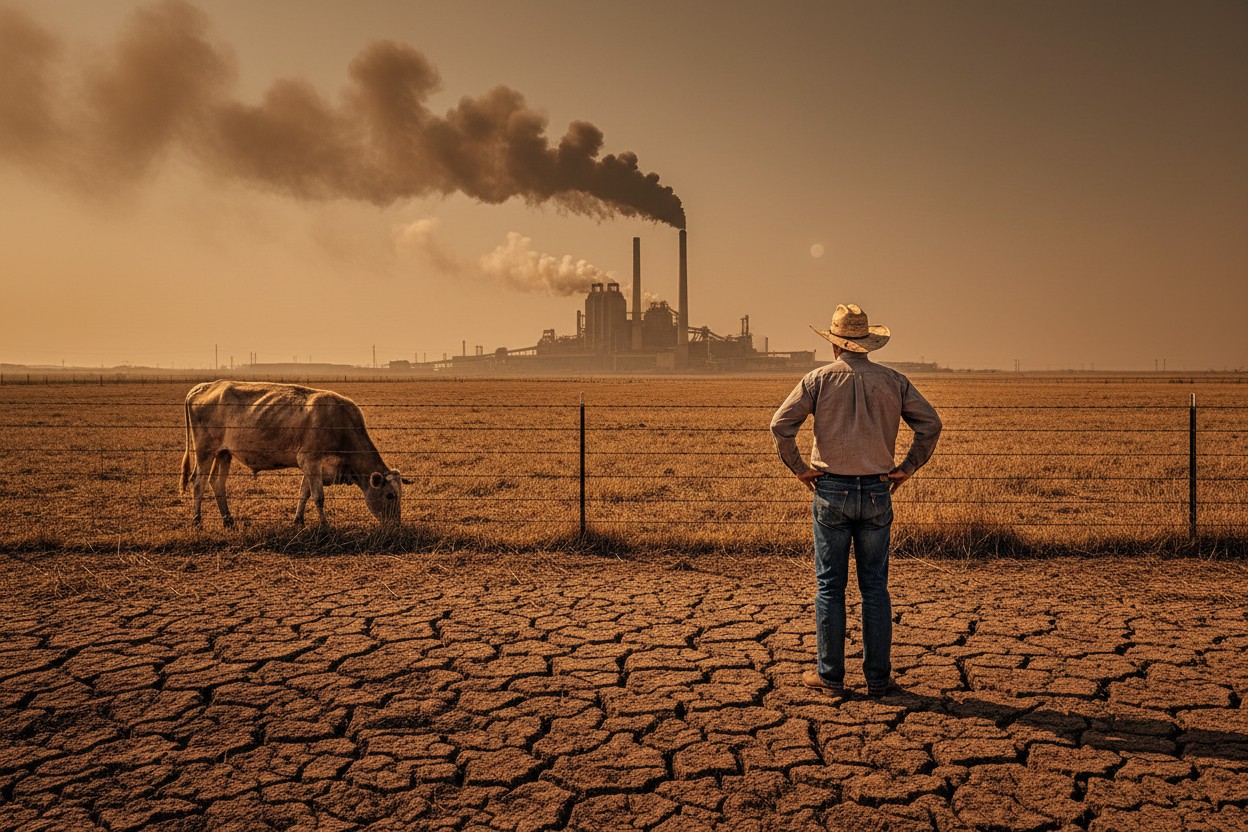
Ranchers' Assessment: Temporary Consumer Relief at Producer Expense
Tim Elkins of Elkins Cattle Company in Texas said the removal of the tariff barrier will drive cattle prices lower while costs for diesel, labor and fertilizer remain elevated. "Our input costs are still sky high," Elkins said. "These costs don't come down for us with this. It just makes us compete with lower cost, lower quality imported beef." [2] Elkins said the primary beneficiaries will be the four largest meatpacking companies – Tyson, JBS, Cargill and National Beef – rather than domestic ranchers. Annalisa Beck of Beck Ranch in Wyoming called the tariff suspension a short-term fix. She noted that calves sold at auction during drought conditions have not yet reached retail shelves. "The entire cattle-raising part of the country is in a drought," Beck said. "The price of hay, fertilizer, diesel fuel, and other inputs are at their highest." [2] The Wyoming rancher argued that educating consumers about the value of locally raised food would be more effective than relying on imports to lower prices. Patrick Montgomery of KC Cattle Company in Missouri described the policy as "a band-aid on an arterial bleed." Montgomery said that while the measure may help consumers at the register, it does nothing to address the structural crisis facing American beef production. [2] He said the economics of ranching are broken and that the next generation of farmers is not replacing retiring cattlemen.Market and Economic Context
Following the Wall Street Journal (WSJ) report on the proposed tariff suspension, shares of Tyson Foods fell 4.5% and Walmart dropped 2.5% in midday trading, while Brazilian meatpacker Minerva Foods rose nearly 2%. [2] The divergent market reaction reflected expectations that lower import barriers would benefit foreign suppliers while pressuring domestic processors and retailers. The U.S. cattle herd has declined to approximately 2 million head, the smallest inventory since 1952, according to a report. Ground beef prices reached a record $6.10 per pound in early 2026, a 50% increase since 2014. [1] The White House said in a statement that "the president is committed to lowering beef and other grocery costs for everyday Americans" ahead of the 2026 midterm elections. [2] The trends in the U.S. beef market parallel broader patterns in agricultural trade. Under the North American Free Trade Agreement, U.S. corn flowed into Mexico at reduced tariff rates, displacing millions of small-scale maize producers. [3] Critics of the beef tariff suspension warned that lower barriers to imports risk similar displacement of domestic cattle operations.Structural Challenges: Drought, Consolidation and Input Costs
Persistent drought across the Great Plains and Southern Plains has driven up hay prices and forced producers to reduce herd sizes. [1] Ranchers face elevated costs for feed, fertilizer, equipment and transportation, even as cattle prices at auction remain high. In April 2026, the U.S. Department of Justice opened a criminal probe into potential price-fixing by major meatpacking companies, according to a WSJ report. [4] The concentration of the U.S. food system contradicts the theory of comparative advantage that underpins free trade agreements. More than half of all international trade involves the simultaneous import and export of essentially the same goods, a pattern that creates inefficiencies rather than gains. [5] In beef, the United States exports high-value cuts while importing lean trimmings for ground beef, a dynamic that benefits large packers but compresses margins for cow-calf operators. Montgomery said American agriculture has lost diversification and relies on subsidized corn and soy production. "If our country ripped away those subsidies today it would be disastrous because we have lost the ability to grow anything else at scale," he said. [2] The consolidation of seed genetics under foreign-controlled entities further limits options for domestic food production, the Missouri rancher added.Outlook: Calls for Long-Term Policy and Food Sovereignty
Ranchers said the administration should pursue policies that lower input costs and incentivize herd rebuilding rather than temporary tariff cuts. "The only way to fix the problem long term is to lower input prices," Beck said. [2] The administration has previously explored importing beef from Argentina, a proposal that sparked debate over food independence and raised concerns among domestic producers. [6] Montgomery framed food sovereignty as a national security concern, pointing to foreign ownership of meat processing and seed genetics. "America is not capable of feeding its own populace anymore," he said. "The question I hear no one in power asking is this: What happens if they turn off our food?" [2] Montgomery said that without structural reform, financial relief programs will end up subsidizing the large corporations that sit between the farmer and the consumer. Meanwhile, the White House said it is fine-tuning the executive order – but no specific timeline for implementation has been announced. [2]References
- Kevin Hughes. "US beef industry in crisis Record prices shrinking herds and mounting pressures on ranchers". NaturalNews.com. February 17, 2026.
- ZeroHedge. "Tyson Sinks, Walmart Falls After Trump Moves To Temporarily Lower Beef Import Tariffs". May 11, 2026.
- Ivor MacDonald. "Land of the living Christian reflections on the countryside".
- ZeroHedge. "DoJ Opens Criminal Probe Into Meatpacking Cartel As Food Stocks Slide". April 20, 2026.
- Jerry Mander and Edward Goldsmith. "The case against the global economy and for a turn toward the local".
- Ramon Tomey. "Trumps plan to IMPORT beef from Argentina sparks debate over food independence". NaturalNews.com. October 23, 2025.
Explainer Infographic


Putin Concludes Beijing Visit With 42 Bilateral Agreements, Stronger Russia-China Ties
By Garrison Vance // Share

U.S. Crude Inventories Fall 9.1 Million Barrels, Nearly Three Times Larger Than Expected
By Sterling Ashworth // Share
Netanyahu’s “hair was on fire” after tense Trump call on Iran deal
By Cassie B. // Share
United Nations: Strait of Hormuz Disruption Could Trigger Global Food Price Crisis Within a Year
By Coco Somers // Share
Xi Jinping set to visit North Korea in bid to revive U.S. denuclearization talks
By Cassie B. // Share
Russia-China summit signals strategic realignment as Moscow deepens dependence on Beijing
By Willow Tohi // Share

Macron fires back at Trump over AI map claiming French islands as U.S. territory
By isabelle // Share

EU quietly plots way to keep Russian billions out of Moscow's reach
By isabelle // Share

It’s Not Panic Buying—It’s Preparedness: Why Smart People Are Stocking Up Now
By healthranger // Share


Being a Person of Principle Will Always Make You an Enemy of the State
By healthranger // Share